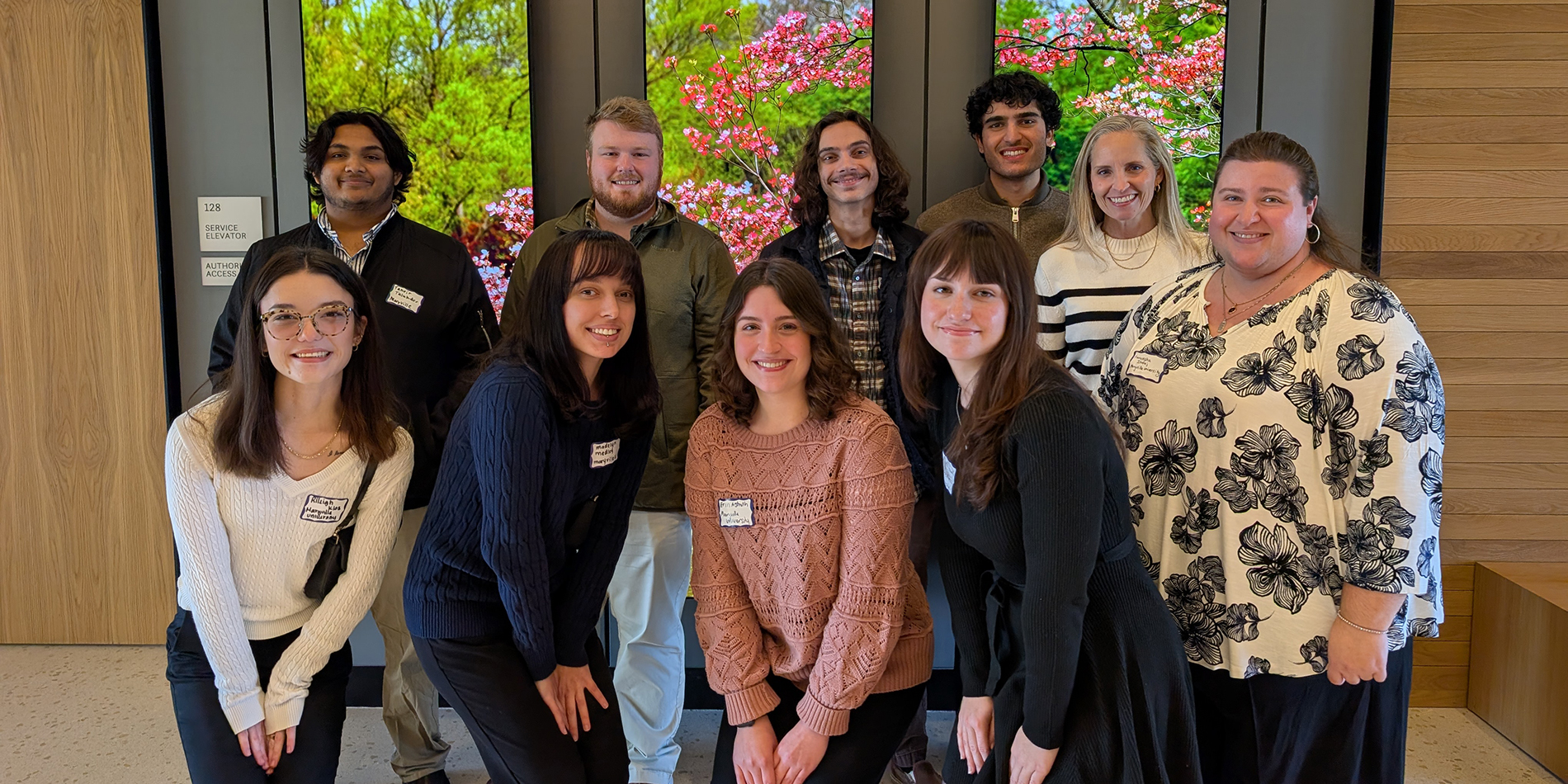
Maryville University learners presented innovative research on climate change, plant biology, and conservation at the 2025 SLEEC Retreat, demonstrating the University’s commitment to empowering the next generation of scientific leaders.
Maryville Learners Lead the Way in Regional Scientific Collaboration
Maryville University learners presented nine original research projects addressing some of today’s most urgent environmental questions at the annual St. Louis Ecology, Evolution, and Conservation (SLEEC) Retreat. The retreat, a cornerstone event for the St. Louis scientific community, brought together researchers, educators, and learners from leading institutions to share discoveries, exchange ideas, and build lasting collaborations.
The SLEEC Retreat is designed to harness the region’s strengths in ecology, evolution, and conservation. This year’s event featured a dynamic mix of oral presentations, a vibrant poster session, and a keynote address, all aimed at fostering innovation and partnership across the St. Louis area. Kyra Krakos, PhD, Maryville University Professor of Biology and SLEEC board member, was proud to participate in the organization of this year’s retreat.
“This retreat exemplifies the transformative power of collaboration in advancing scientific understanding,” said Krakos. “SLEEC provides a great platform for our students, and Maryville students are a strong presence in the local science community.”
Building a Stronger Scientific Community
The SLEEC Retreat is a celebration of regional collaboration and a catalyst for new partnerships. By bringing together learners and experts from Maryville University, Washington University in St. Louis, Saint Louis University, the Missouri Botanical Garden, and more, the event strengthens the St. Louis region’s reputation as a leader in ecological and evolutionary research.
Learn more about some of Maryville’s original projects below:
- Research Spotlight
- Maryville learners’ research spanned a wide range of topics, reflecting both the diversity of the University’s scientific community and its commitment to hands-on, empowering education.
- Climate Change and Plant Resilience
- Mara Dearth and Dr. Krakos explored how climate change impacts the reproductive biology of Rosa setigera, asking whether environmental stressors make plants “lovers or fighters.”
- Franceska Isufaj and Dr. Krakos examined the effects of winter drought on Phlox pilosa in their project, “Blooming Resilience,” providing insights into how native plants adapt to unpredictable weather.
- Madelyn Medley and Dr. Krakos investigated how rising temperatures affect Phlox divaricata in “Hot Phlox Summer,” while Rileigh Klos, Isufaj, and Dr. Krakos studied the impact of drought winters on Penstemon digitalis.
- Tanvir Talukder, Isufaj, and Dr. Krakos focused on “Dry Winters, Busy Bees,” analyzing how dry conditions shift pollination patterns in Penstemon cobea.
- Ethnobotany and Microbial Diversity
- Erin Astroth and Dr. Krakos bridged traditional and modern science with their ethnobotanical study of Scutellaria incana, tracing its uses from Cherokee heritage to contemporary applications.
- Patrick McKenna and Dr. Krakos delved into the “nectar microbiome” of Castilleja coccinea, uncovering how microbial communities in flower nectar influence plant health and pollinator attraction.
- Pollination and Habitat Studies
- Arya Sabourizadeh and Dr. Krakos compared urban and rural pollination in “What happens when pollination gets hot?”—a timely look at how city environments and climate change affect plant-pollinator relationships.
- Oscar Spatola, Dr. Krakos, and Isufaj compared glade and prairie habitats in “Reproductive Rivals,” studying how different environments shape the reproductive biology of Asclepias tuberosa, a key plant for monarch butterflies.
Empowering the Next Generation
Maryville University’s strong presence at the SLEEC Retreat reflects its mission to empower learners through hands-on research and transformative partnerships. Collaborations with the Missouri Botanical Garden and other institutions provide learners with world-class mentorship and resources.
By encouraging bold, innovative approaches to environmental challenges, Maryville continues to prepare learners for meaningful careers in science and conservation. The research presented at SLEEC not only advances scientific understanding but also inspires hope and practical solutions for a changing world.
About Maryville University
Founded in 1872, Maryville University is a comprehensive and nationally ranked private institution with an enrollment of well over 9,000 students. Maryville offers over 90 degrees at the undergraduate, master’s and doctoral levels, as well as several certificates that align with the undergraduate and graduate education levels. Maryville is recognized as the third fastest-growing private university in the United States by The Chronicle of Higher Education, serving students from 50 states and 56 countries. More than 50,000 Maryville alumni globally, many of whom work and live in the St. Louis region.